how to replace elements in top third, middle third, and bottom third of matix
Info
This question is locked. Reopen it to edit or answer.
Show older comments
This question is soft-locked: new answers that are equivalent to already posted answers may be deleted without prior notice.
My task is the following:
Write a function called trio that takes two positive integer inputs n and m. The function returns a 3n-by-m matrix called T. The top third of T (an n by m submatrix) is all 1s, the middle third is all 2-s while the bottom third is all 3-s. See example below:
M = trio(2,4)
M =
1 1 1 1
1 1 1 1
2 2 2 2
2 2 2 2
3 3 3 3
3 3 3 3
This is the code that I wrote, but it only works for T = trio (4,3). I want my code to work for any input of n,m.
function T = trio (n, m)
T = randi (10, (3 * n) , m);
T ( 1:n , :) = 1;
T ( (n+1):(end-(n-1)) , :) = 2;
T ( (n+3):end, :) = 3;
end
How is it possible to call out only top third, middle third, and bottom third of any matrix?
Thank you in advance.
6 Comments

Gowtham Karaka
on 24 May 2020
function T = trio (n, m)
T = randi (10, (3 * n) , m);
T ( 1:n , :) = 1;
T ( (n+1):(2*n) , :) = 2;
T ( ((2*n)+1):end, :) = 3;
end

MD. AL NAHIAN SAYEM
on 17 Jun 2020
Edited: Walter Roberson
on 13 Oct 2021
function k=trio(a,b)
x=ones(a,b);
y=2*ones(a,b);
z=3*ones(a,b);
k=[x y z]
end
MD. AL NAHIAN SAYEM
on 17 Jun 2020
For random input use k=trio(round(rand),round(rand))

Sai Swaroop Maram
on 28 Jul 2020
function M=trio(n,m)
p=3*n;
q=(1/3)*p;
M=[ones(q,m);2*ones(q,m);3*ones(q,m)];

mahmoud khaled
on 11 Aug 2020
function T=trio(n,m)
T=[ones(n,m) ; (2*ones(n,m)) ; (3*ones(n,m))];
end

I'm going to delete duplicate answers. I will consider the list below as the list of solutions. From the current answer section I will only leave the top one for each of these:
- all answer with general advice about how to solve the question
- answers with more than 1 vote
- allocating the full size array with ones or zeros and indexing into it, writing the correct values
- allocating the full size array with a non-standard function (like randi) and indexing into it, writing the correct values
- 3 and 4, but for the three parts separately, requiring concatenation
- kron (posted in a comment)
- repmat combined with implicit expansion
If new valid solutions are posted I will of course leave those as well, although I think the non-esoteric solutions may be exhausted.
Accepted Answer

James Tursa
on 1 May 2019
Edited: James Tursa
on 1 May 2019
2 votes
Your row indexing is wrong.
The first n rows are 1:n which you have correct.
The second n rows indexing is n more that the first set, so simply add n: n + (1:n)
The third n rows indexing is n more than the second set, which I will let you figure out (it's pretty simple)
3 Comments

Marlon Izaguirre
on 1 May 2019

Ajay Raineni
on 4 Apr 2020
Pls can you help me

Ammar
on 27 Sep 2023
function T = trio (n, m)
T =randi (10, (3 * n) , m)
T ( 1:n , :) = 1
T ( (n+1):2*n , :) = 2
T ( (2*n+1):end, :) = 3
end
More Answers (6)

AYUSH GURTU
on 28 May 2019
function T = trio (n, m)
T = randi (10, (3 * n) , m);
T (1:n,:) = 1;
T ((n+(1:n)),:) = 2;
T (n+(n+(1:n)):end,:) = 3;
end
2 Comments

sona rai
on 9 Aug 2020
% sir this is right code instead of your code.
function T=trio(n,m)
T=randi(10,(3*n),m);
T(1:n,:)=1;
T((n+(1:n)),:)=2;
T((n+(n+(1:n))),:)=3;
end
t

SATHISHKUMAR S
on 3 Aug 2021
What is the input argument for this?

PRAKASH ANAND
on 8 Nov 2019
% That's my trio code.
%From India.
function T=trio(n,m)
x=ones(n,m);
y=2*x;
z=3*x;
T=[x;y;z];
end
7 Comments

Risa Dwi Ratnasari
on 8 Dec 2019
hello.... why you write
x=ones?

Danish Dutt Attrey
on 28 May 2020
To get a matrix with all the numbers which are one

Rafael Eduardo Pachas Vega
on 4 Aug 2020
awesome

vanam sindhuja
on 10 Aug 2020
It's so easy and presence of mind,smart thinking.Thank you

SUMAN CHATTERJEE
on 6 Sep 2020

Shubham
on 31 Dec 2021
Thank you brother

OUSSAMA El GABBARI
on 19 Jan 2022
that function you made I see it's very restricted.. I wonder if it'd work for matrices of larger dimensions !

evan muas
on 2 Dec 2019
function T=trio(n,m)
T=[ones(n,m);2*ones(n,m);3*ones(n,m)]
end
3 Comments

Stephen23
on 17 Apr 2020
+1 straightfoward solution. I might as well leave this general solution here too:
>> trio = @(n,m) kron([1;2;3],ones(n,m));
>> trio(2,4)
ans =
1 1 1 1
1 1 1 1
2 2 2 2
2 2 2 2
3 3 3 3
3 3 3 3

Upoma Saha
on 19 Jul 2020
this is abosulely amazing.

Akinola Tomiwa
on 25 Jul 2020
Nice

Juvraj Singh Sandhu
on 4 Oct 2020
Edited: Juvraj Singh Sandhu
on 4 Oct 2020
this will work for all inputs
function T= trio(n,m);
T1= ones(n,m);
T2= 2*ones(n,m);
T3= 3*ones(n,m);
T= [T1;T2;T3];


mayank ghugretkar
on 5 Jun 2019
function T=trio(n,m)
T(3*n,m)=3; % or you can use random no. generation...but since we are assigning alues anyway , this vl work fine !
T(1:n,:)=1;
T((n+1):2*n,:)=2;
T((2*n+1):3*n,:)=3;
end
hope this'll help, welcome !
1 Comment

SWAMI NAIDU BODDU
on 1 Jun 2020
Perfect code for random inputs also...... Thanks you sirr!!.....

Doga Savas
on 22 Aug 2019
function d = trio(n,m)
a = randi(1,n,m);
b = 2 + rand(n,m)*0;
c = 3 + rand(n,m)*0;
d = [a;b;c];
end
3 Comments
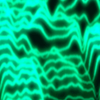
Sure, but why use rand()/randi() to simply preallocate an array? Why would people upvote it?
I mean, if the name of the game is embellishment, you could always go further and make it obvious.
trio(2,4)
function d = trio(n,m)
a = imread('peppers.png');
t = 1:size(a,3)-1;
a = imgaussfilt(a,mean(t));
x = mod(double(a),permute(size(a,t(1))-(2298/6:-1:2667/7),[1 3 2]));
q = max(x,[],ones(1,2)+[0 1]) + norm(ones(1,size(a,3)))/(2*cosd(30));
c = reshape(q,1,[]).*ones(n*m,round(pi));
d = permute(reshape(c,m,[]),[fliplr(t) sum(t)]);
end
... but that's a lot of work for nothing.
function d = trio_no_baloney(n,m)
d = ones(n*m,3).*(1:3);
d = reshape(d,m,[]).';
end
trio_even_less_baloney = @(n,m) repelem((1:3).',n,m);
n=2;m=4;
trio_even_less_baloney(n,m)
Although your point is absolutely valid.
DGM
on 8 Sep 2023
Yeah, maybe I should've called it trio_reduced_baloney()
I figured repelem() was already officially exhausted. Reshaping/permuting might not be minimal, but it was a reasonable basic option that was still fair game.
This question is locked.
Categories
Find more on Cell Arrays in Help Center and File Exchange
Community Treasure Hunt
Find the treasures in MATLAB Central and discover how the community can help you!
Start Hunting!