Deploying AUTOSAR-Based Deep Learning Models to ECUs
Akshata Kulkarni, Mercedes Benz Research and Development India
Immanuel Utchula, Mercedes Benz Research and Development India
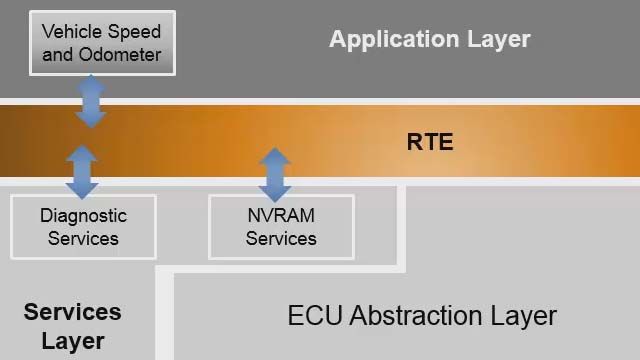
Performing deep learning inference on microcontrollers in automotive applications reduces latency, minimizes network dependency, and enhances security, offering a cost-effective solution. However, integrating deep learning models often requires disrupting existing processes, addressing tool dependencies, and deploying solutions on resource-constrained devices. Adapting to AUTOSAR standards ensures better compatibility, scalability, maintainability, and resource management.
This session explores implementing deep learning models in AUTOSAR-compliant C code for automotive ECUs. Mercedes-Benz engineers used MATLAB® and Simulink® to convert deep learning models developed in Python using frameworks like TensorFlow into production-quality AUTOSAR-compliant C-code. This code can also be customized for specific compilers and hardware optimizations, enabling seamless integration into existing processes and efficient ECU deployment.
This project, executed in collaboration with MathWorks India, leverages Deep Learning Toolbox™, AUTOSAR Blockset, and Embedded Coder® for automatic code generation to accelerate vehicle software deployment. The implementation includes optimizing numerical precision and performance using Fixed-Point Designer™, along with neural network optimization techniques to minimize memory usage and computational demands, enabling deployment on resource-constrained devices.
Recorded: 12 Nov 2025
Related Products
Learn More
Featured Product